resources
drink spiking laws
California has passed a series of laws related to drink spiking that impact establishments with a Type-48 liquor license:
AB 1013 (effective July 1, 2024): Requires Bars & Nightclubs to offer “drug testing devices” & associated messaging
AB 2389 (effective January 1, 2025): Require bars & nightclubs to contact law enforcement or emergency medical services under certain conditions related to drink spiking
AB 2375 (effective July 1, 2025): Will require Bars & Nightclubs to provide drink lids upon request for an additional fee & modified signage
AB 2402 (on or before January 1, 2027): Will require RBS (Responsible Beverage Service) training courses to prevent & respond to incidents of drink spiking.


Many tests on the market have a "limit of detection" that is much higher than a standard dose of GHB or ketamine, which runs the risk of false negatives
Many of these tests react to a pH change, meaning that common ingredients in mixed drinks such as water, milk/cream, or blue coloring may trigger a false positive.
One study found that the accuracy of the results is akin to flipping a coin
Users are not likely to test until they feel impacted or threatened, meaning that they would be performing the test while inebriated and/or dysregulated, which increases the chance of user error.
The distinction between a positive and negative test result might not be so clear due to common environmental variables of nightlife settings (loud, busy, dark, etc.).
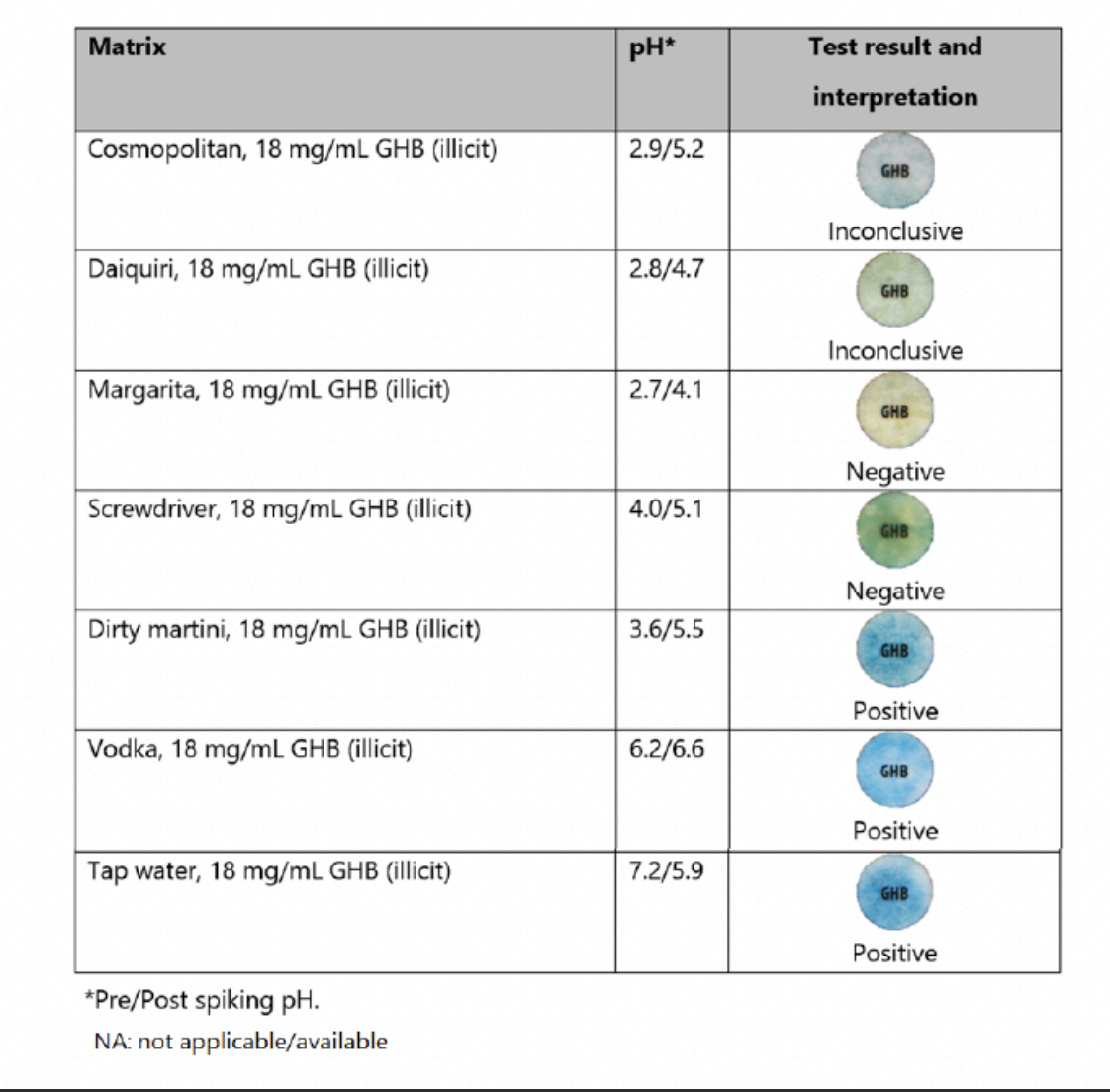
source: Mireille Germain et al., On-site Drug Detection Coasters: An Inadequate Tool to Screen for GHB and Ketamine in Beverages, Forensic Science International, 2023
drug-facilitated sexual assault (DFSA)
Occurs when “alcohol or other drugs are used to intentionally sedate or incapacitate a person and commit sexual assault.”
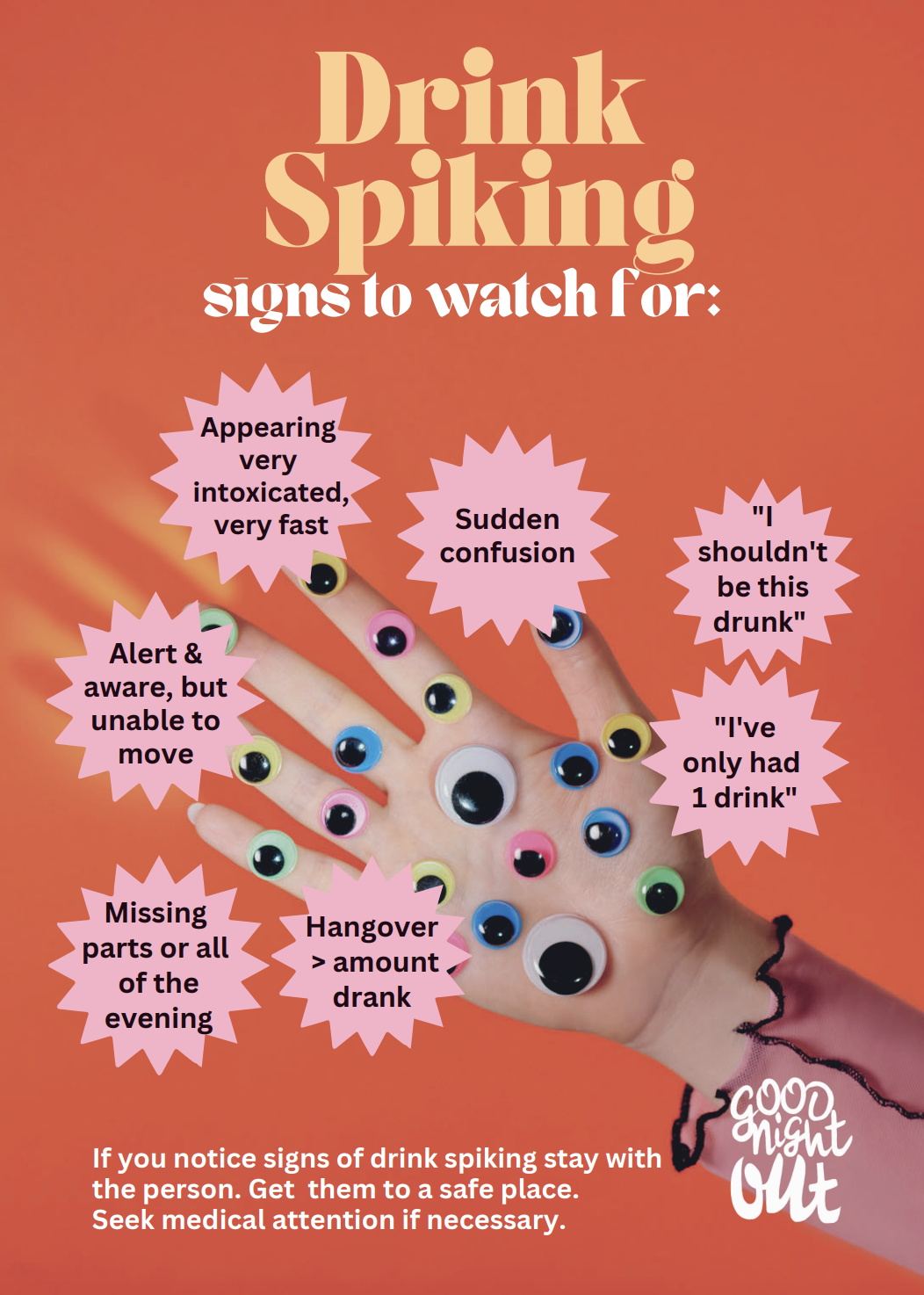

source: good night out vancouver
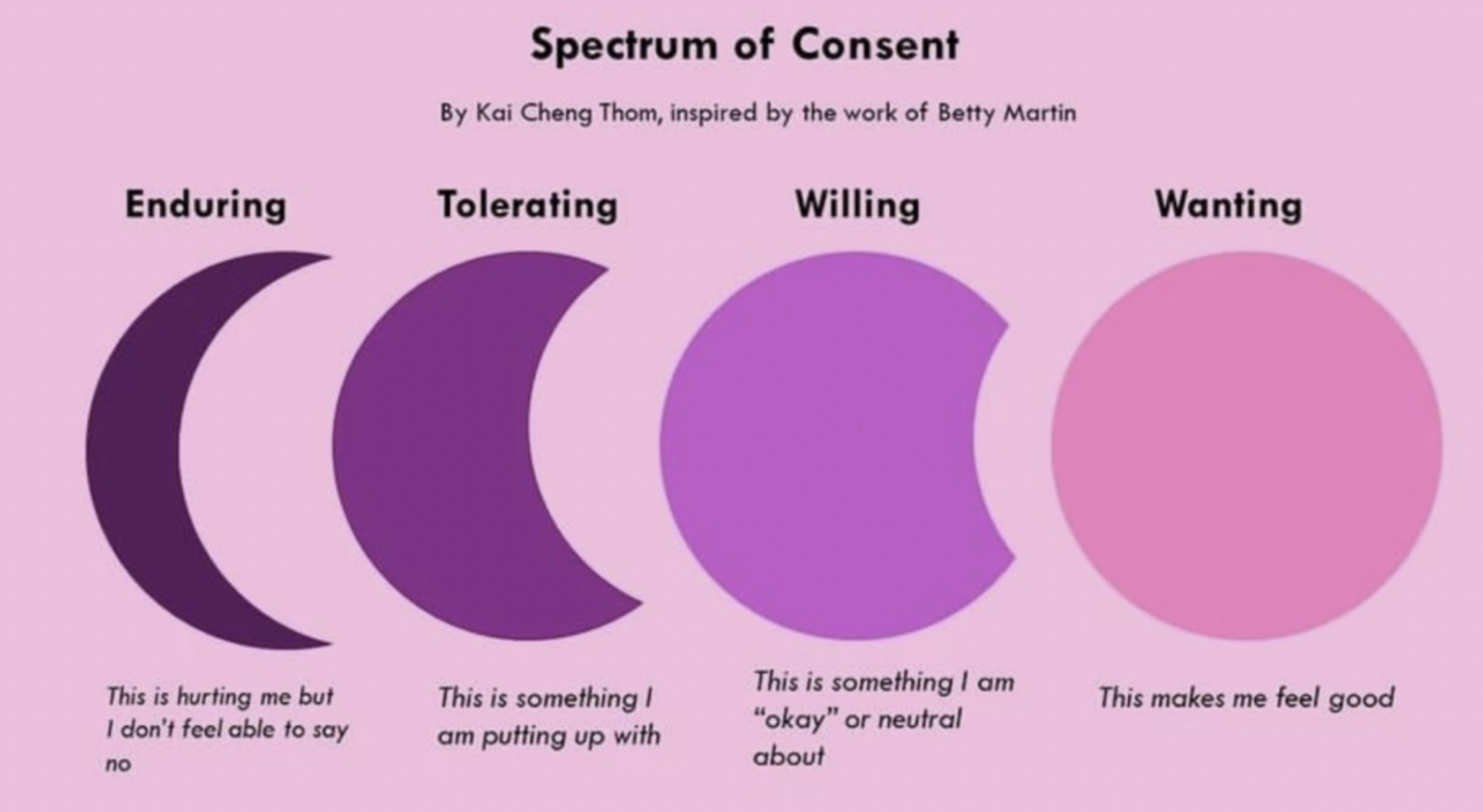
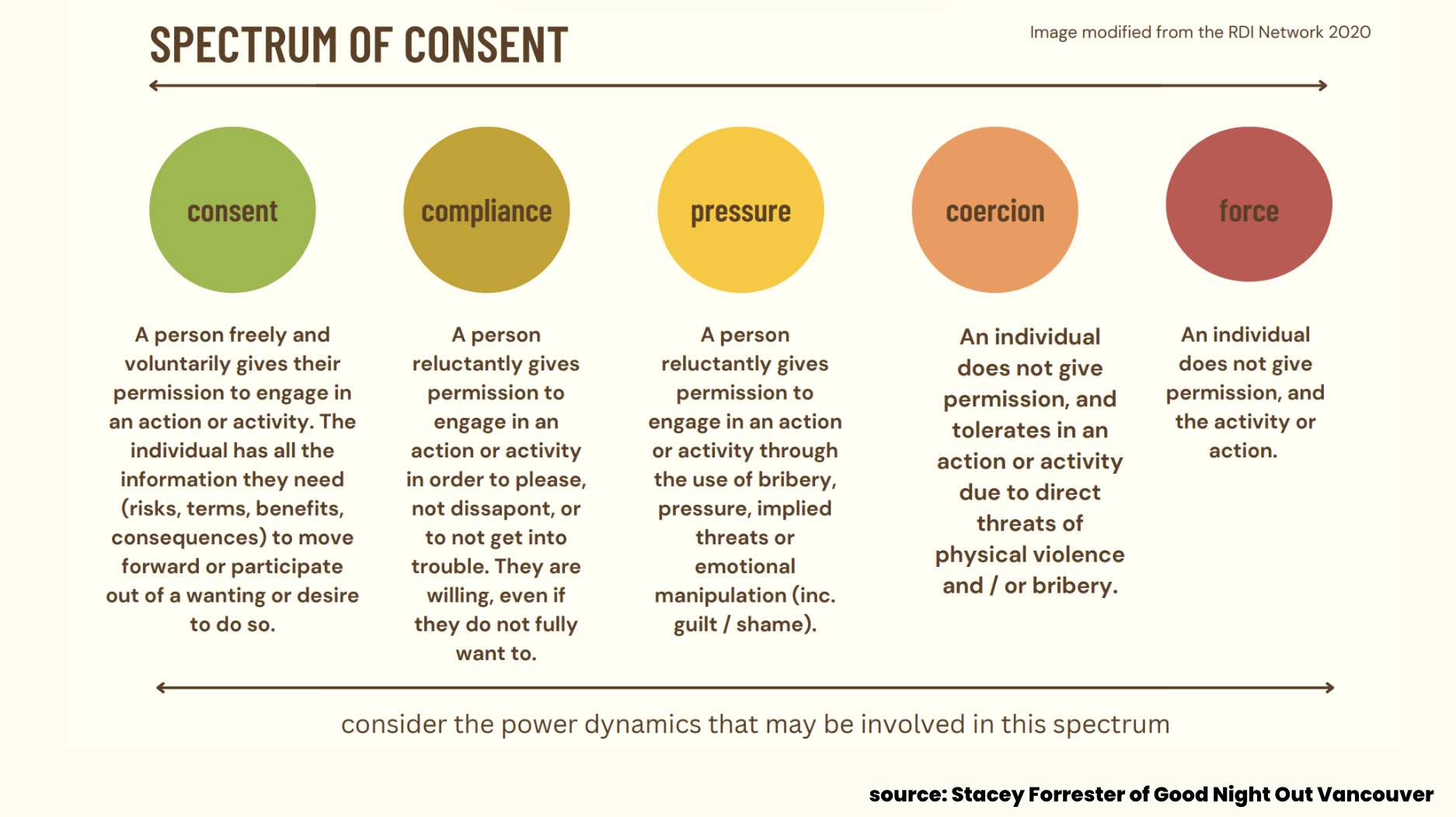
consent